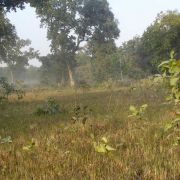

Sal is a dominant tree species in the community forest of Terai. Sal forests occur at elevations up to 1500 m above sea level. With respect to its silvicultural characteristics, Sal has been described as the most gregarious and aggressive tree species of the forest (Troup 1921 cited in Sapkota et. al. 2009). Sal is a light demander and climax species that tends to dominate mature stands if there is no human interference. Sal has an enormous regeneration capacity under suitable conditions. Natural regeneration is the only relevant regeneration method for Sal (Joshi et. al. 1995 cited in DFRS, 2009). Regeneration comes much from coppice and growth of seedlings, which have dieback in previous years. Therefore, operations in natural forest are generally directed to enhance the development of already existing undergrowth.
| Stand type | Buddhanagar CF | Santi CF | Charpala CF | Shankarnagar CF | Rudrapur CF | Palpali CF | Pargati CF |
| 2026/1/24 | 2026/2/9 | 2025/2/31 | 2025/12/18 | 2025/12/30 | 2025/7/26 | 2025/7/29 | |
| Regeneration | 8405 | 5312 | 14304 | 8291 | 3752 | 9546 | 12549 |
| Sapling | 2170 | 2317 | 1474 | 169 | 580 | 3212 | 4093 |
| Pole | 73 | 170 | 506 | 795 | 292 | 212 | 101 |
| Pole GS m3 | 7.57 | 27.0 | 68.20 | 119.16 | 16.67 | 18.88 | 12.47 |
| Tree | 62 | 95 | 87 | 26 | 99 | 151 | 130 |
| Tree GS m3 | 125.89 | 185.53 | 157.50 | 87.76 | 141.0 | 256.2 | 248.0 |
A reasonable number of regenerations are found in all community forest of Tarai but the stand structure is varied depending on crown coverage. High crown coverage retards the growth of undergrowth. The forest plots having low canopy cover had higher mean height and mean DBH compared to the plots having high canopy cover (DFRS, 2009). The CF which has less number of mature trees found maximum number of undergrowth as well as high growing stock of pole. The forest which has less number of mature trees but more poles also has fewer saplings that mean high coverage of pole retards the growth of saplings. Thus appropriate stand structure is essential for the growth of forest trees which could be achieved through appropriate silvicultural practice. The stand structure recommended for sustainable forest management is presented in Table 2.
Sal forests could be successfully managed under both the High Forest and the Coppice systems. Selection, Clear felling and Shelter wood systems are implemented under the High Forest system and Simple Coppice, Coppice with Standards, Coppice with Reserves and Selection Coppice are followed under the Coppice systems. Improvement felling such as singling and thinning, and climber cutting would also carried out for Sal stand development. Thinning is designed to improve future growth by regulating stand density. According to the silvicultural guideline for implementation of OFMPs in the Terai the harvesting methods should have following six steps. The number of trees retained after each harvesting methods is given in Table 2.
- Singling/thinning in sapling forest: The objective is to remove excessive coppice and seedlings. The most vigorous and best formed one are selected to be retained and some of their competitor are removed.
- Immature thinning in pole or middle aged forest: The objective is to improve the growth and form of tree retained trough removing 3D, badly formed trees and unwanted species.
- Mature thinning in middle aged forest: The objective is further accelerate the growth of retained trees giving more space to grow.
- Seeding felling in middle aged forest: The objective is to give more light to the existing seedlings to induce the regeneration process.
- Regeneration felling in mature forest: The objective is to accelerate regeneration process. The number of trees to be retained depends on the prevailing regeneration.
- Final felling of mature tree: The objective is harvesting of forest products.
| SN | Stand type | Silvicultural operation | Tree retained after silvicultural operation | Remark | |
| LFP mid-west, Dang | FMUDP technical report 15 | ||||
| 1 | Regeneration | Singling | 5000-10000 | 5000-10000 | |
| 2 | Sapling | Singling | 2000-4000 | 3000-4000 | |
| 3 | Pole | immature thinning | 1100-1600 | 1100-1700 | |
| 1st thinning | 700 | 700 | |||
| 2nd thinning | 500 | 400 | |||
| 3rd thinning | 250 | 250 | |||
| 4 | Tree | Seeding felling | 100-150 | 130-150 | |
| Regeneration felling | 40-50 | 40-80 | |||
Forest date showed that the Terai sal forest has over stocking and most of the trees are over matured. In community forest, allowable cut is calculated according to the forest inventory guideline (Government of Nepal) where annual growth is calculated as percentage of growing stock and allowable cut as percentage of annual growth and this procedure underestimate the harvesting volume. The community forests apply the conservative estimation of productivity and allowable cut and possible consequence of this is that most of the forests are under utilized (Sapkota et. al. 2009). The forests managed by users have profound regenerations but due to the maximum number of mature tree undergrowth development is slow. The forest having more mature trees than required with declining annual growth do not permit undergrowth to develop due to less light penetration and high competition resulting less annual growth of forest than as usual. But due to high deforestation in past users are reluctant to cut the green tree. Policies like not to cut the green trees for some years also hinder the management of forests.
Current management practices are inadequate and inefficient to manage the Sal forests sustainably. In past Sal forest management plans (OFMPs) cannot be successfully implemented due to negative influence of local and political elites and encroachment of forest land by locals.
Appropriate silviculture practices increase productivity of a forest stand in quality and quantity in the sustainable way. Mean height and mean DBH increments were directly related to the crown cover percentage. The forest plots having low canopy cover had higher mean height and mean DBH compared to the plots having high canopy cover. This could have happened because of excessive light penetration and favorable growth condition inside the forest of low canopy cover. Biomass productivity of the plots having low canopy cover was found higher compared to the plots having high canopy cover. It might have occurred because of reduced crown cover and good undergrowth (DFRS, 2009).
Growth and yield information should be made available through an appropriate inventory and calculation method that would allow computation of an annual allowable harvest that can be extracted from the Sal forests while still preserving the sustainability of the ecological, economical, and social values of these forests. Appropriate silvicultural practices and growth and yield information should be disseminated to the users as well as policy makers through Technical and institutional education and training.
The management of community forest depends on the development and implementation of a sustainable management plan applying appropriate silvicultural system to protect and conserve these important resources. Community has attempted some initiatives to protect these important ecosystems but the sustainability of these resources is questionable due to a lack of sound management strategies. A sustainable management plan should be developed by involving all beneficiaries and stakeholders and should be effectively implemented to conserve Tarai Sal forests for present and future generations.
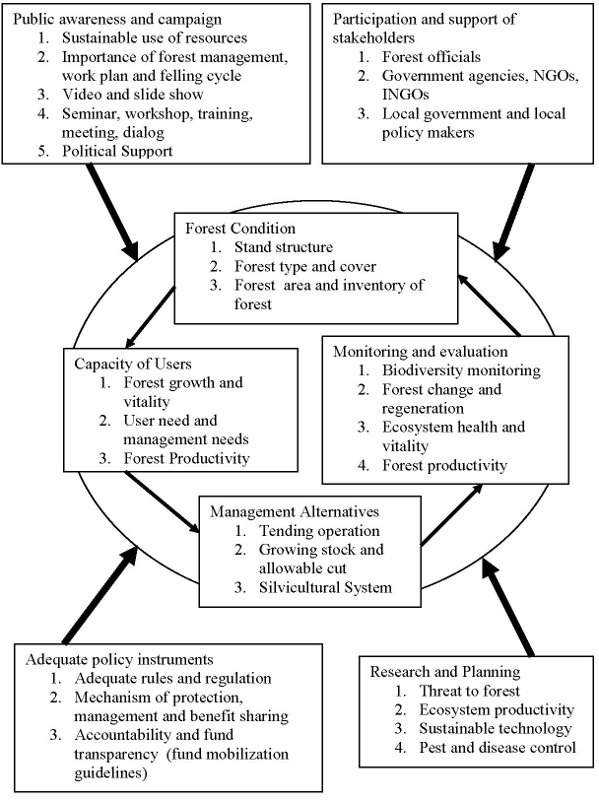 Fig 1: The schematic presentation of a sustainable management plan for Sal forest ecosystem.
Reference
- DFRS, 2009: Managing degraded Sal (Shorea robusta Gaertn. f.) forests in the Terai of Nepal.
- Sapkota P. and Meilby H 2009 : Modeling the growth of Shorea robusta using growth ring measurements, Banko Jankari vol 19, No 2.
- Mohammed Mahabubur Rahman, Md. Motiur Rahman, Zhang Guogang, Kazi Shakila Islam, 2010: A review of the present threats to tropical moist deciduous Sal (Shorea robusta) forest ecosystem of central Bangladesh, Mongabay.com Open Access Journal - Tropical Conservation Science Vol. 3(1):90-102.
- FMUDP, 1995: Silvicultural guidelines for the implementation of OFMPs in the Tarai, Nepal, Technical report 15.
- LFP Dang, 2064: Community forest and sustainable forest management system
Category: