

This programme is implemented in the...
03Nov
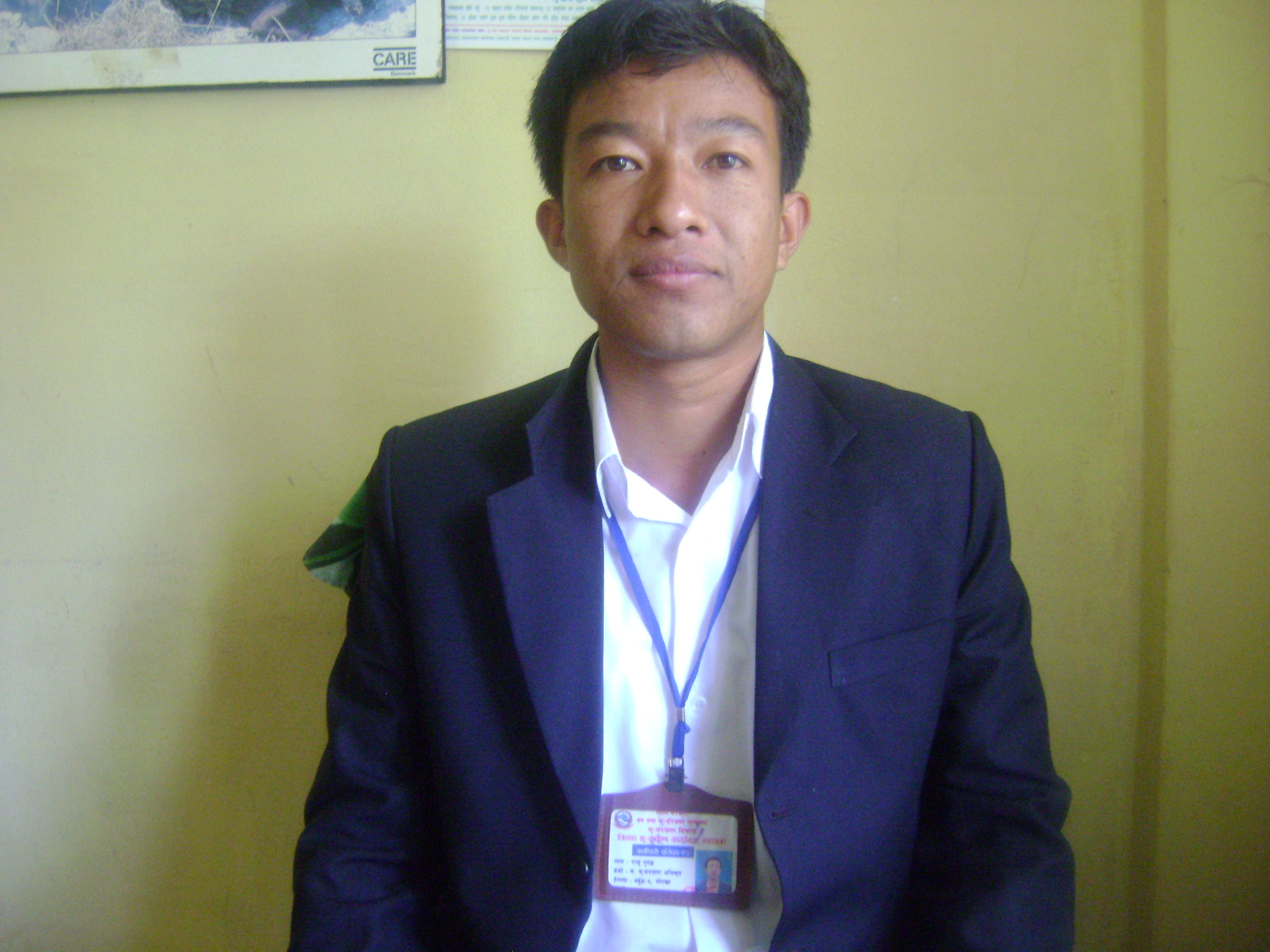
District Soil Conservation Office (DSCO), Syangja has been Implementing SABIHAA Model Replication with the assistant of Government of Japan, KR II Fund since F. Y. 059/060 following DSCO-SABIHAA Operational Guideline for Model Replication (OGMR) developed by JICA assisted Community Development and Forest/Watershed Conservation Project, Phase II (CDFWCP-II).
This article consists of overview of CDFWCP-II purpose, approach and key concepts, DSCO-SABIHAA OGMR purpose, objective and key concept, the program.
The experiences of numerous forest/watershed projects in Nepal including the HMG/JICA Forestry Extension Project (1991-1994), led HMG Nepal to request JICA to establish a new project with the concept of community development through forest/watershed conservation. In July 1994 the “Community Development and Forest/watershed Conservation Project Phase I” commenced with support from another JICA supported project ‘HMG/JOCV (Japan Overseas Cooperation Volunteers) Greenery Promotion Cooperation Project’, In collaboration with the Department of Soil Conservation and water Management (DSCWM) under Minister of Forest and Soil Conservation (MFSC), Government of Nepal, as its counterpart. A total of 10 VDCs, 5 each in the two districts of Kaski and Parbat in the Western Development Region were targeted by the project.
A participatory and bottom-up approach was adopted by the project. This ‘needs driven’ project also made gender and social equity issues, including the issues of the occupational castes, one of its main focuses. Approximately 900 Users Groups (UGs) were facilitated and supported to manage various sub-project by themselves. JICA also assigned its own experts to assist in the project implementation. A total of 10 JOCVs stayed and worked in the VDCs with mid-level technicians of the DSCO and staff of local NGO contracted with JICA, while 6 JICA experts were stationed at the project Headquarters in Pokhara. This first phase concluded in July 1999.
HMG/Nepal requested the project to establish a model, which would be applicable to other hill areas in Nepal, in order to replicate the knowledge and experiences achieved through the project. Consequently, a second phase of the project was initiated in July 1999, with similar packages as the pervious one. During the second phase also 10 VDCs, 5 in Kaski and 5 in Parbat, were identified. However, unlike in the first phase changes with regard to the support of JICA experts and employees were evident. Due to security reasons the Japanese government prohibited any Japanese (both JICA Expert and JOCV) and Nepalese employed by JICA to go and/or stay in the rural villages. The project has thus been modified to adapt to the new situation in the country and the second phase of the Community Development and Forest/Watershed Conservation Project Phase II (CDFWCP – II) thus came to life. In this line, CDFWCP-II or in other words SABIHAA ( SA = Samuhik Community, BI = Bikas Development, HA = Hariyali Greenery, A = Aayojana Project) was implemented from July 15, 2025 to July 14, 2025 with the purpose of participatory community resources management on an equitable and sustainable basis with active involvement of the people in its process pf planning, implementation, monitoring and evaluation. SABIHAA implemented its activities under the Operational Guidelines (OG) developed from the experiences of CDFWCP-I in project areas. Project anticipated that VDC is grass root level permanent political government body and all the local level development works are carried out under the supervision and coordination of the VDC. The Ward is the smallest unit local body consists of one or more hamlets. Hence, the Ward Conservation Committee (WCC) with in frame work of VDC has been formed to implement project activities.
Overall Approach of Community Development and Forest/Watershed Conservation Project Phase II (SABIHAA)
The overall vision of the project is that based on their initiatives people will acquire the capacity to carry out community resource management. With the goal of alleviating poverty and improving the natural environment in the hill areas of Nepal, a two-pronged approach has been adopted for the active management of community resources by the local men and woman. On the one hand there is a focus on the capacity building of the people, and on the other hand the people are support to identify and implement sub-project which will directly benefit the people. Various groups and committees, such as the User Groups (UGs), POWER Groups and Ward Conservation Committees (WCCs), are formed at the grassroots level for program Implementation and empowerment of the target communities.
Gender and Social Equity Approach
The implementation of CDFWCP-II focuses on a participatory and bottom-up approach, with special attention given to gender and social equity issues of the occupational castes (OCs). It is one of the few projects to have focused on the OCs in Nepal. In fact two key concepts of the project are ‘Gender and Equity’ and ‘Empowerment’. ‘Gender and Equity’ addresses primarily gender equity, which is equitable relations between woman and men, and social diversity which is equal relation between castes and ethnic groups. Both these concepts highlight the need for a participatory and equitable approach to ensure management. The project aims to ensure that the disadvantaged and underprivileged people, especially woman and OCs gain opportunities for benefits and equal involvement.
Bearing in mind that the success of community resource management depends, among other things, upon the active participation and empowerment of woman and OCs, the project has promoted the integration of gender and equation almost every aspect of the project activities, whether in terms of groups' activities, training or technology transfer to the counterparts. Key points have been addressed, namely: the difficulty for woman and OCs, to participate in meetings at the decision making level; the difficulty to access education; the difficulty to get information within their own communities; and the difficulty to generate income and to access and control resources.
POWER Program
A core component of the overall SABIHAA program is the POWER program. Established by the WCC, the POWER program is also run by it. The POWER program has been developed with the vision of initiating capacity building program for woman, and particularly the underprivileged women.
Adult literacy classes, composed of different levels, are the first and most important activity and are called POWER/ALCs. There major steps of empowerment for POWER Groups members have been envisaged through this program ; (i) to act as a group; (ii) to develop the confidence level of the members to express their opinion in public; and (iii) to enable the member to take actions for their community development, including the community resource management .
WCC
The ward Conservation Committee (WCC) is the core organization for people in the community to plan and implement integrated community resource management activities. The WCCs have stemmed from the initial baseline information collected on the wards and the Community Resource Workshop that ensued. These workshops, which were conducted in each of the identified wards, discussed the current and future problems and also worked on their future vision for their community. As the main coordinating body of the project the key activities of the WCC are as follows;
- Formulation of the community Based Watershed Management Prospect (CBWMP). Community Resource Management Plan (CRMP) and Annual Action plan (AAP).
- Facilitation of people’s participation with Mid-Level Technician and local Motivator
- Intermediary work between people and MLTs and Local Motivator
- Administration of UGs and sub-Projects
- Support of POWER Group and supervision of POWER program
- Fund establishment
The WCC composition encompasses the following representatives;
- Around 10 person in total, with at least 30% female members (50% is strongly recommended)
- All the ward members (5person)
- 2 representatives of the POWER Group
- A few persons representing the Users Groups
- A few person recommended by the Project
User Group
One of the major activities of the project is the implementation of participatory community resources management project in hill areas. These sub-projects are identified and are coordinated by the WCC, which helps in the formation of Users Groups for the various sub-projects. A UG is comprised of all the community members covered by particular sub-project. UG members organize themselves by appointing a committee of their members which organizes them to carry out the sub-project activities, depending on the nature of their individual skills.
Project’s key concepts
Participatory Approach
The most essential concept of the project is concluded through the recognition that sustainable community resource management requires capacity enhancement of the rural people in comprehending and solving their own problems. Because these people’s livelihoods depend on the utilization of their community resources. The project will promote people’s participation through WCC throughout the project period. Therefore, all project activities will be based on bottom-up participation believing that such participation will encourage further involvement of people throughout the process.
Integrated Community Resource Management
In promoting a participatory approach to community resource management, the Project will support Integrated Community resource Management at the ward level in order to guarantee that all people are able to use various community-level resources to support their daily lives. The project will not respond to private or individual needs rose by people, but will support the integrated needs of the community that arise from the Community Resource Management Plan (CRMP) and the Annual Action Plan (AAP). The project will organize ward level community resource workshop and will support people in the formation of WCCs, and in the formulation of the Community Based Watershed Management Plan (CBWMP), CRMP and AAP.
Capacity Building
With the understanding that integrated community resource management requires enhancing people’s capacities, the project support capacity building activities. In order to meet the needs of the WCC, the project will support training for WCC member. Furthermore, in conducting activities such as WCC formation, formulation of CRMP and AAP, and implementation of sub-project, including sub-project under the POWER programmed, the project should ensure that each component serves as an on-the-job training (OJT) in building people’s capacity.
Mainstreaming Gender and Equity
The project recognizes the gender and social relation in the most communities in Nepal in which women and disadvantaged groups are subordinated. This recognition not only justifies the concentration of women’s and DAGs development activities and access to resources, but also show the centrality of and mainstreaming of gender and social analysis and consideration in the development of Nepal is inevitable. Therefore, the project will pay careful and appropriate attention in order to ensure benefit and equal involvement of women and disadvantaged groups into the entire project cycle. The project will never support any activity against this principle.
Working strategies
VDC/WCC approach
The Project emphasize to approach the area based on the local governance body, not based on the geographical features or the watersheds, to increase sustainability of integrated community resource management through people’s participation and to promote in effectively and efficiently . It also helps to coordinate with other local governance bodies, DDC and especially VDC, easily, approaching all the Wards of the VDC irrespective of the watershed. Project activities are carried out at the Ward level as a unit which is the smallest local governance body, with the core of WCC being Ward chairperson and other Ward members. To reflect people’s opinion through all the activities equitably, the other WCC members are considered to be well-balanced formation from a viewpoint of fender and social equity.
The field Orientation
All project activities should be implemented with consideration of the situation in the ‘field’ (the target community), in order to work on issues of importance to the field, and based on the needs identified by the field. In order to smoothly and appropriately promote field-based activities, one Mid-level Technician along with local Motivators will be in charge in each target VDC. Hence supporting the field activities is the main objectives of other groups of the Project organization’.
Collaboration with NGO/CBO
In order to promote effective and efficient integrated community resource management through a participatory approach, the project will through WCC, collaborate with local NGO, CBO, and other existing people’s group in the community (such as forest users’ group and water users’ group), from the viewpoint of utilizing existing organization/human resources. Moreover, the Project will coordinate with line agencies and donors working in the same area. Such coordination will be carried out, upon request from WCC, in accordance with the principles of participatory approach and people's need. On the other hand, the Project will disseminate information to line agencies and donors continuously.
Concept of NRM in the Project
Our natural resources such as land, forests, water and livestock are the basic inputs for generating livelihood in rural community. These resources should be used judiciously and carefully. Rational utilization, conservation and development of natural resources for forthcoming generation are the true meaning of sustainable natural resources management. However, with the increasing population pressure, people are over exploiting these resources, to meet their demands. The human pressure on forest and agriculture land for food and forest product has resulted degradation, which has further led to the decline of soil fertility and agricultural productivity. Sloppy land cultivation and unscientific farming system has yielded more erosion and nutrient depletion, which is irreversible. Erosion, landslide, debris flow and mass movement occurred in upstream watershed not only effect socioeconomic of upstream people but also to downstream creating problems like flood; and silt deposition in the river course, irrigation channel and aquatic ecosystem. The negative impacts exerted on one natural resource effect other resource too since the natural resources are interrelated direct or indirect way. For example, if there is forest degradation due to over use and land use change, it effect the flow pattern of river and its water quality.
Ideal Concept of watershed management adopted by DSCWM
Department of Soil conservation and watershed management considers the watershed as development unit for natural and human resources management. All the activities are being implemented on sub-watershed basis ranging from 15-25 Square Km. CDFWCP-II has taken VDC approach for community resources management to support local government body based on the spirit of decentralization policy.
Watershed management area adopted by DSCWM is geographical and hydrological watershed area, which is literally a topographically delineated area of land from which rainwater can drain as surface run-off, via a specific stream or a river system to common outlet point, which may be a dam, irrigation system or municipal water supply take off point, or where stream/river discharge into large river, lake or the sea whereas watershed management is considered as the process of guiding and organizing land and other resource uses on a watershed to provide desired goods and services without affecting adversely soil, water and other natural resources. It involves multiple natural resources and requires understanding of the relationship among land use, soil, water, and the linkage between upstream and downstream areas. Watershed degradation can be viewed as having either on-site or off-site (down stream). Off-site relates to downstream consequences of upland activities. Farmers are the key stakeholders responsible for watershed management since their daily life is supported by natural resources existed in watershed. Government line agency District Soil Conservation Office (DSCO) under DSCWM is assisting farmers in their task of managing the watershed coordination with mainly green sector line agencies.
The DSCOs Kaski, Syangja and Parbat have already replicated SABIHAA model in their working areas since F.Y. 059/060. In addition, three more DSCOs Myagdi, Baglung and Tanahu have started to replicate SABIHAA model by using KR II Fund since F. Y. 062/063. Now, there are six DSCOs from western hills of Nepal replicating SABIHAA model. Thus, they need uniformity in model replication and for this one model replication guideline is necessary to be development. Moreover, the experience gained in the project has shown that the OG is a milestone in implementation of the DSCOs activities systematically and manageably.
The OG development in the project cannot be used as such since there are government’s rules and regulations particularly the financial procedures. The project phased out from 16 July 2005. Considering these facts, this OGMR has been prepared. The experience and knowledge gained in the project has been unitized in this OGMR Similarly experience of DSCOs has been also been incorporated in this OGMR Basic elements and concepts of OG have been carried over in this guideline.
SABIHAA Model
SABIHAA is abbreviation of Community Development and Greenery Project and SABIHAA model is evolved during first and Second phase of HMG/JICA/JOCV: Community Development and Forest/Watershed Conservation Project and Greenery Promotion Cooperation Project. Operation Guideline has been developed by the project for the purpose of participatory community resources management on an equitable and sustainable basis with active involvement in its process of planning, implementation, monitoring and evaluation. This model is in line with decentralization policy of the government of Nepal, Local Self-Governance Act (LSGA)-2055 and Local Self Government Regulation (LSGR) –2056 have also possibility of using the WCC for systematic and planed development works in the VDC. However, this model, in a gist can be understood as follows.
- VDC should have a concrete integrated plan of its area for systematic development work. VDC has to take overall responsibility of development works.
- WCC should be formulated to gear up the grass root level development works. It should facilitate/assist the local communities in preparation of vision based community resource management plan well as execution of the plan.
- Coordination and collaboration is must to execute of the plan.
- Gender and Social Equity should be intensively mainstreamed in each and every step of development works.
- On the job Training (OJT) should be internalized for better learning in working field. This also as learning by doing through which everything should be taken as experience gain.
Overall Purpose of the OGMR
- To make easy in implementing the activities of DSCWM under the supervision and inspection of local body.
- To implement and improve DSCO’s activities as per LSGA-2055 and LSGR-2056, and to improve its working procedures gradually.
- To make easy for revising and improving WCC concept gradually.
- To make easy to get legal and institutional status for WCC.
- To help DSCWM for mainstreaming the WCC concept in the organization.
- Ultimate purpose of this guideline is to establish uniformity in DSCWM program execution in the district level by development participatory integrated watershed management model.
In the project, the social mobilization part was followed very sincerely and hence, the project became very successful. Social mobilization part in the project was proved very effective in program implementation. Social mobilization is a continuous work that cannot be restricted to specific areas only. It is done different level i.e. community organization, planning process, plan implementation, capital formation through community savings, monitoring and evaluation
In social mobilization three steps can be identified, those are i) Representation ii) Voice and Visibility and iii) Incorporation and implementation of ideas of the newly empowered group. Social mobilization will increase people’s awareness and knowledge about gender and asocial equity and daily (deprived people) issues as well. It ultimately helps in bridging the gap between people with and without power and empowers them.
In principle, the mobilization should be through the local government body i.e. VDC/DDC. But for the time being this work will be facilitated by the DSCOs through Motivators (MOTs) and Technicians.
Objectives of the Operation Guideline Model Replication (OGMR)
Overall objectives of this guideline are as follow:
- To help the DSCOs in assisting the Ward Conservation Committees (WCCs) for their empowerment in mobilization the user groups (i.e. problem identification, need identification, planning, implementation, monitoring & evaluation, care & maintenance)
- To help the users for community resource management and group management in their community on the basis of gender and social equity in sustainable way.
- To help the WCCs in preparing overall planning for the development of ward.
- To make the the WCCs capable in facilitating and coordinating activities of the ward in a sustsinable and equitable way.
- To guide the Mid-level Technicians (MLTs) and MOTs in implementing the activities in the field
- To strengthen DSCO’s service to the users in grass root level.
Guiding Principle
The guiding principle is the purpose of the previous CDFWCP II (SABIHAA) project-"Community development through the watershed management with active involvement of the local people in community resource management planning implementation monitoring and evaluation on sustainable and equitable basis".
Key Concept of OGMR
The key Concept of OGMR is referred from SABIHAA. In addition, DSCWM policies are incorporated which are as follows.
Integrated Community Resource Management
The local people have to find out all the resources existing in the community and manage them for improving their living standard. It is not sufficient to consider only the problem but also the causes and related problems in an integrated way while solving local people’s problems. The opportunities and potentialities of the local communities must be explored for sustainable development. The DSCO has been entertaining only the ward-level integrated community resource management plan (CRMC) of the local community. The DSCO has not supported individual level attempt but has supported through collective attempt of local people. The DSCO has been helping VDCs/WCCs and local communities to formulate periodic plan i.e. Community Based Watershed Management Perspective (CBWMP), mid-term plan i.e. Community Resource Management Plan (CRMP), and short-term plan i.e. Annual Action Plan (AAP).
People centered and Participatory Approach
The DSCO’s SABIHAA activities have been implemented on the basis of existing conditions, solution of problems and their need of the targeted communities in a participatory manner. The local people were involved in Bottom-up planning, so that their involvement in all the process could be secured and accomplished work would be sustainable. The DSCO has promoted people’s participation through WCCs. The local people have taken part from problem identification, need identification, planning, decision-making, implementation, care and maintenance of the development works.
Social Mobolization
- Mainstreaming Gender and Social Equity (GSE): All the people (women, men, children, differentially capable, rich, poor, different castes) have their right to get benefited from implemented development works in the community. The DSCO has paid proper attention in benefit and involvement of the people in development works. The DSCO has been helping underprivileged and women in the community through special activities allocated in Annual program and budget.. Gender and social equity consideration in all the activities have been given special attention.
- Empowerment and Capacity building: The DSCO has organized various empowerment and capacity building activities such as training, workshop and study tour, IGA for deprived people etc. in order to implement integrated community resource management plan prepared by the local communities. WCCs and POWER groups were empowered and their capacity were enhanced through specific activities allocated in Annual program and budget.
- Coordination & Collaboration with stakeholders: Despite of the DSCO efforts to help WCCs and local communities for implementing the CRMP, additional support of different line agencies working in the area is needed for effective execution of the plan. The WCC has been coordinating with other line agencies themselves. Similarly DSCO has been coordinating with District Development Committee (DDC), VDCs and other green sector line agencies (i.e. Forestry, Agriculture, Livestock, and Irrigation etc.) and other stakeholders too. The DSCO has coordinated and has collaborated with other organizations during implementation period in the field. In this way much more work have been done with less effort. The DSCO has been playing a facilitating role.
On Job Training (OJT)
With the concept of ‘Learning by Doing’, local communities and WCCs have gained experience, knowledge and confidence. Local people have internalized the good experiences and knowledge. In this way, good knowledge, skill can be promoted and disseminated.
Promotion of Local and Indigenous Knowledge
The DSCO has continuously been attempting in promoting local and indigenous knowledge and technology (ITK) for sustainability of the program. There are various local technologies for soil conservation and watershed management in the local communities. The DSCO has been paying proper attention in identifying and promoting ITK. ITK have been integrated in implementation of activities whenever and wherever possible..
Emphasis on Local Cost Technologies
The heavy and costly technologies for soil conservation measures have been discouraged to apply and identification and promotion of sustainable and low cost technologies like Bio-engineering/Vegetative engineering and Sloping Agriculture Land Technology (SALT) has been emphasized. DSCO has explored, has promoted various indigenous soil conservation technologies. Hence, local people had felt their potentialities for community based soil conservation and watershed management work.
Target area and Beneficiaries
Sub-watershed has been the management unit for soil conservation and watershed management activities implementation. Lubdhi Khola sub-watershed was selected referring Sub-watershed prioritization of Syangja district. Three complete VDCs Khilung, Swarek and Dhapuk located inside sub-watershed were taken for SABIHAA program implementation. During target area selection, spatial and socio economic conditions have been considered for social and gender equity.
Motivator’s (MOT) selection and orientation
Motivators from concerned VDCs were selected among the women based on qualification (S.L.C. pass). MOTs have been responsible for social mobilization works. After selection of the MOTs, DSCO has given orientation training about working modality, working process etc. before assigning them to the field. They have been supporting the MLTs in field-based activities as well as have been facilitating the local people and WCCs.
Conclusion
The DSCO-SABIHAA OGMR program implemented by DSCO, Syangja has contributed in the area of improving environment and poverty alleviation in target area of Syangja district. SABIHAA program has been successfully implemented its approved Annual Program and Budget to achieve the purpose of community resources management on an equitable and sustainable basis with active involvement of the people in its process of planning, implementation, monitoring and evaluation. In this context, DSCO's MLTs and MOTs have worked as frontline actors with targeted local communities, WCCs and VDCs in remote hilly area syangja in order to achieve the annual targets and to deliver the goods and services to local communities. All the administrative staff have also shown their energetic attitude to deliver prompt service to local communities by understanding spirit of the DSCO-SABIHAA OGMR program.
The following are the some concluding remarks of key findings and observation on DSCO-SABIHAA OGMR program implementation.
- The DSCO-SABIHAA OGMR program has for the first time introduced process oriented bottom up participatory planning with due consideration gender and social equity issues in promoting community resource management by enhancing capacity of local communities.
- DSCWM, Government of Nepal has internalized the DSCO-SABIHAA OGMR program through implementing program in eight districts of Nepal and has plan to extend the Model in other districts of Nepal.
- This program has strengthened the concept of collaboration with local NGOs and CBOs and well established the coordination mechanism with local Governance bodies such as DDC, VDCs, and WCCs, Government line agencies in green sector and other stakeholders.
- WCCs of target area have successfully formulated a periodic mid term plan such as CBWMP, CRMP with the active participation of local communities, UGs VDCs and DSCO in order to achieve the purpose and objectives of DSCO-SABIHAA OGMR program.
- This program is pioneer in affirmative action initiatives for gender an social equity inclusion in SCWM and has incorporated POWER program to enhance gender and social inclusion.
- The program is based on need driven approach addressing issues related to natural disaster prevention, rural infrastructure protection, community development and life improvement, resource conservation and development with the partnership of local communities.
- It has emphasized in good governance, transparency and accountability by adopting the cost sharing and division of works of sub-projects/activities, internalizing public auditing and allocating budget ceiling for WCC in annual program and budget.
- This program is process oriented and demands dedicated self motivated, trained staff to execute the program. Hence, the provision of refreshment training for staff is needed to increase their efficiency and to increase their motivation.
| Attachment | Size |
|---|---|
 SABIHA_0.pdf SABIHA_0.pdf | 92.27 KB |
Category: