

Studies on the relationship between...
09Jun

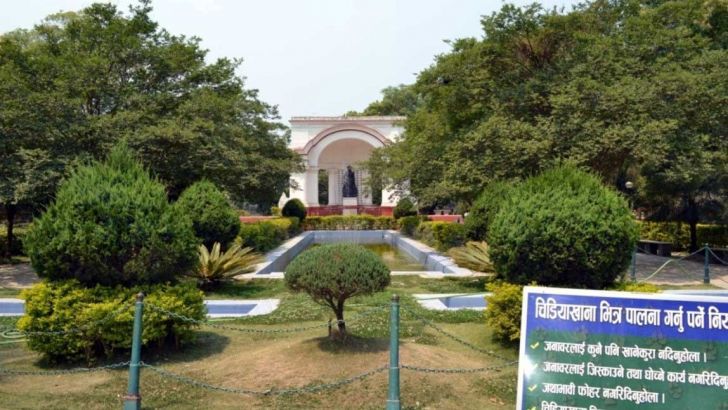
The oldest zoo in Nepal, the Central Zoo was established in 1932 by late Prime Minister Juddha Sumsher JBR as his private collection of animals. The zoo is located at Jawalakhel, Lalitpur with an area of 6 hectares. After the political changes in 1951, the ownership of the zoo came under the Government of Nepal & was opened to the public in 1956. At the beginning, the zoo remained under the management of the various Departments of the Government. Eventually, on 29th December 1995, the management of the zoo was formally handed over to the National Trust for Nature Conservation (NTNC) for 30 years.
NTNC aims to develop the zoo as a "Center of Excellence" for wildlife research and conservation education. NTNC has developed a master plan for the zoo. The major thrust of the master plan is on three components: physical improvement, animal collection & management and conservation education.
Altogether, there are 73 staffs in the zoo, among which 40 staffs work for animal care and management. The zoo serves as recreational center for the visitors. It also serves as a historical cultural site for diverse group of people.
Animal status
Population of the wild animals in the zoo is enumerated each day by the staffs and recorded at the end of each month. From the data of Chaitra, 2070, there are 880 wild lives belonging to 116 species. Among these are 36 species of 198 mammals, 52 species of 375 birds, 11 species of 32 reptiles and 17 species of 275 fishes. The zoo has prioritized preservation of endangered species of Nepal like One-horned Rhinoceros, Royal Bengal Tiger, Gharial crocodile, Golden Monitor Lizard, Crimson horned Pheasant, etc. It has, in its collection, 11 species of endangered mammals along with 2 species of birds and 3 species of reptiles. These are the animals which are either borne in the zoo or orphan animals or rescued animals brought at the zoo. The zoo has performed animal exchange program with some zoos abroad and has introduced some exotic animals such as Ostrich, Hippopotamus, Lady Amherst, Golden pheasant, etc. Altogether, there are 4 species of exotic mammals, 20 species of birds, 3 species of reptiles and 17 species of fishes. These exotics have added attraction to the collection.
Animal nutrition
Animals are fed according to their food preference and dietary requirement. 43 items of foods are fetched at the zoo each day. These items are categorized into three types as flesh & eggs, fruits & vegetables and cereals. Cereals are stocked for about a month while other food items are bought fresh. There is a primary store and other five sub-sections to prepare food for the animals. There is no compromise in the quality as well as quantity of the food items.
Papaya, pumpkin, sugarcane, green vegetables, potato, eggs, chickens, flesh, cereals, etc are found throughout the year and are fetched daily. Other seasonal fruits and vegetables are supplied as food enrichment. The food items are first washed in potash water and then cut into required sizes. Ungulates are offered with cereals like grams, beans, maize, etc, soaked in water and mixed with minerals. For bears, a paste is made by mixing bread, milk, honey, molasses, minerals, banana, etc. Tigers are fetched with raw meat containing bones.
Fixed amount of food is given to the animals daily at a scheduled time. Primates and elephants are fed 4 times a day, ungulates 2-3 times a day, tiger once a day, bears 3 times a day and other animals are also fed accordingly. Specific staffs are authorized to feed a particular species.
Predatory animals like cobra and python do not feed upon carcass. In such a case, live feeding is done. Cobra is fetched with chickens and rabbits are served to the python. The prey animals (chickens, rabbits, mouse, etc) are reared in the zoo. Some animals like owl, jungle cat, leopard, jackals, etc are provided with live prey occasionally for food enrichment.
Habitat structure
Though the area of the zoo is not sufficient enough for its inhabitants to have an ideal captive environment but the animals are exhibited in spacious enclosures, which replicate their natural habitat and stimulate their behavioral patterns. Special enclosures for birds, mammals, reptiles and fishes have been developed. The animal management unit focuses to enrich the enclosures to provide better habitat for the animals and to improve their living condition.
In order to remove stress, different settings have been created in the enclosures according to the animal preferences. For tiger, there is a pool, cave, hiding place, a high platform, scattered logs, hanged tire, etc. Sometimes, flesh is hanged in rope, pellets and hairs of deer are scattered, perfume is sprayed and other such activities are done in order to excite the tigers. Similarly, to remove stress on bears, they are fed regularly, branches and logs are scattered in their enclosures and tire is hanged for them to play.
Captive breeding
The primary purpose of the zoo is successful breeding of the animals in captivity, especially endangered and exotic ones and releasing those who can survive in the wild. Priority is given to natural breeding and condition for natural mating is ensured to produce healthy offsprings.
Breeding is assisted in case of pheasants, whose survival rate is low at young stage. Eggs are brought in hatchery where they hatch in artificial condition and young birds are reared till they can survive in the zoo environment.
Health & disease
To ensure proper health of the animals, animal hospital has been established at the zoo. Physical examination, routined blood examination, vaccination, etc is done there to prevent animals from various diseases. Regular vaccination against rabies is given to primates and other susceptible animals. Vaccination against foot and mouth disease is given to ungulates.
Climatic concerns for animal welfare
Since the zoo is located at the capital city, Kathmandu, which has moderate type of climate, native animals can adjust well in its environment. For some exotic animals which need specific climatic conditions, habitat manipulation is done. Red panda, a high altitude animal is kept in enclosure with air condition system by maintaining temperature of 20-22 0C, desert bird, ostrich is kept in enclosure with sandy soil and proper sun warmth. All fishes in the zoo are exotic, brought from Bangkok and 26-28 0C of water temperature is always maintained in the aquarium.
Population management and surplus animals
The area of the zoo is limited and hence to keep the population of animal within the carrying capacity of the zoo, breeding control is done either by sterilization, vasectomy, castration or separating male and female during breeding season (done, especially in case of birds).
Surplus animals like spotted deer, barking deer, black buck, etc which can survive in the wild state have been released in Mirgasthali, Pasupati and Botanical Garden, Godawari.
Budget allocation
Anually around 2 crores is spent for animal management only, in which 1crore 10 lakhs is spent on animal food, 2 lakh 50 thousands on medicines, 1 lakh 25 thousands on food and habitat enrichment and the remaining amount is spent for cage repairment, maintenance and other activities.
Tags:
Category: