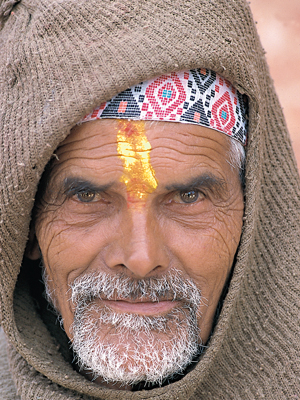
Nepalese men are some of the most hardworking and friendly people you will ever meet. They are always willing to help out, whether it’s with carrying something heavy or just offering a friendly smile. They are also very hospitable and will often invite you into their homes for a meal or tea. Nepalese men are very family oriented and will do anything for their loved ones. They are also very proud of their culture and traditions. You will often see them wearing traditional clothing, such as the dhoti, and participating in religious festivals. Although they may not show it, Nepalese men are very emotional and caring. They are always there for their friends and family, no matter what. So, if you ever find yourself in Nepal, be sure to say hello to the friendly men you meet!
The village of Kala Bang has seen a decline in its population from men to women, children, and the elderly. According to Prakash Gurung, 80 percent of his village’s young men have chosen to leave for foreign jobs. More than 2.5 million Nepalese have traveled abroad since 2006 for work, the majority in low-skilled jobs. More than 200 men once took part in a funeral procession, according to Gurung. In the past, there were only a few men capable of carrying the body up to the top and performing the ceremonies. The majority of the 230 houses that dot the hill slope where Kala Bang is situated are not occupied. Dr. Ganesh Gurung, the founder of the Nepal Institute of Development Studies (NIDS), a non-profit organization, studies migration issues in Nepal.
According to Gurung, mass migration of Nepalese youths has had a significant impact on Nepal’s internal migration. Remittance has become the primary source of income for the Kala Bang community, which is traditionally an agricultural community. The Dalit community is a caste group in Nepal’s once-Hindu Kingdom that lives in the lower rungs of the hierarchical caste system. For generations, the Dalit community has been oppressed due to discrimination. He has lived in Kala Bang all of his life, and his family has farmed on the hill-top for more than 200 years. After retiring as a section officer from the Nepal Industrial Development Corporation, Gurung returned home to the Nepalese people in 2002. Gurung, who is not educated, does not have a lot of high hopes for the future.
He wants to ensure that no one leaves the village for better education in the future. As a result of the trend, the village is now providing Homestays to both local and international tourists as a source of income. Despite the fact that he has never relocated to foreign countries for work, Gurung does not object to it. He sees a positive social impact on the Dalit community once their men begin working abroad. Despite the village’s near-emptying of young men, Gurung is optimistic about the future. Despite the fact that change will not happen overnight, he predicts a bright future for the country.
Despite the fact that Nepal is a predominantly patriarchy-dominated society, there are approximately two million more women than men. A female’s life expectancy is higher than that of a male, which is one of the reasons for this disparity. In Nepal, the life expectancy is 71 years.
What Is Dating Like In Nepal?

There is no one answer to this question as dating in Nepal can vary depending on the person’s culture, age, religion, and social status. However, some common themes among Nepalese daters include spending time with family and friends, going on dates to the cinema or out to eat, and getting to know each other’s families. Nepal is a relatively conservative country, so couples often wait until they are serious about marriage before having sex.
Wearing dating shorts with a shirt in public is not required, but long customs are. Women in villages typically wear saris or skirts with midcalf-level skirts, but trousers are now more acceptable. In most temples, it is not permitted to wear leather. If you are in public with a couple, you may draw unwanted attention if you kiss or cuddle. A small culture of genuine beggars thrives in the bakshish alms market. A Hindu and a Buddhist have long and honorable traditions of giving lepers, dates, sadhus, and monks as gifts. Despite the frenetic chaos of Kathmandu, which sprawls and teems into the Bagmati River to the north, Patan adheres to nepal customs while adhering to the hill tribes’ traditions.
Tinder has the advantage of being available to both men and women, but Bumble is designed primarily for women. With this approach, women are encouraged to break away from gendered expectations and take the first step, which has resulted in a sense of safety for women online in many places. Bumble can be downloaded from the Google Play store or the App Store.
Nepal: The Best Dating Apps For Finding A Compatible Match
It is not easy to date in Nepal, depending on your location and cultural background. Some dating apps, on the other hand, such as Bumble, Badoo, and Pure Hookup, cater to a specific type of person. You can sign up for as many of these apps as you want for free, and there are numerous features available, such as GPS location tracking. It can be difficult to find compatible matches, but with a little persistence and research, you should be able to find someone to date.
What Is The Role Of Men In Nepal?
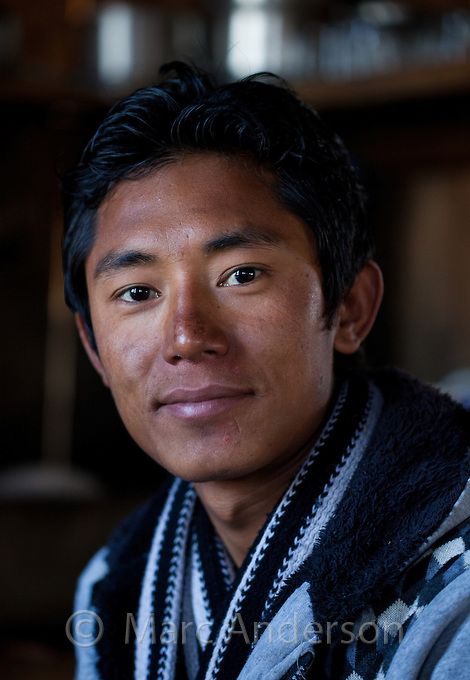
Men’s employment is typically full-time, and they provide more financial support for their families. When he grows older, he is in charge of taking care of his family farm (if one exists) and caring for his parents. When it comes to gender equality, I believe Nepal is on track with the majority of other nations.
Nepal is home to more than half of all people, with women accounting for more than half of all adults. Men have enjoyed their constitutional rights to the fullest extent, but women have not. Men are taking on new roles in the bread industry as sole bread owners, caretakers, and masters in an attempt to break the stereotype of the sole bread owner. Hari grew up in Gaurigaon, a Brahmin-dominated village in Maharashtra, with some Dalits also living there. Radha, a Dalit girl from the same village, was one of the first people he came across. The result of their meeting was an intimate relationship. Unfortunately, Hari’s family rejected the relationship, which they did not like.
There has been a significant amount of time wasted. A cute baby girl has infused the family with love and happiness, but there is something missing. Despite his troubled past, Hari still hopes that his family will forgive him and one day accept Radha as a member of their family.
It will take a long time for Nepal to achieve gender equality in both the overall ranking and individual areas. Men dominate the country and make up the majority of the population, making the country’s patriarchal society a major barrier to women’s advancement. Nepalese women are also discriminated against in the workplace and are unable to access education or health care. It should come as no surprise that Nepal ranks last among all countries in terms of women’s rights. Nonetheless, with the right policies and initiatives, Nepal can make significant progress in its efforts to improve gender equality.
Nepal’s Patriarchal Society: Men Empower And Constrain Male Behavio
In Nepal, men are typically perceived as superior to women, and women are regarded as subordinate. The dominant gender in a family was the man, who led his daughters and sons. Men continue to play an important role in families by modeling gender norms and adult sexuality, providing resources, providing nurturance, and managing and maintaining the family unit. Throughout a family unit, each of these primary male sex roles has the effect of empowering – and sometimes constraining – male behavior.
Girls and women are generally expected to dress in feminine clothing and be polite, accommodating, and nurturing, for example. Men are typically expected to be strong, aggressive, and bold. Gender roles are expected in every society, ethnic group, and culture, but they can vary greatly from group to group.
Despite Nepal’s gender equality status, it is ranked 115th out of 188 countries on the Global Gender Equality Index’s reproductive health, empowerment, and economic status index. The Global Gender Gap Index, published by the United Nations Women, also ranks Nepal 110th out of 145 countries.
What Is Considered Disrespectful In Nepal?

When communicating with others, it is considered disrespectful to use your left hand; all other gestures should be done primarily with your right hand. Step over any form of statue of a god or deity, or any item used for worship, is regarded as disrespectful.
Because of their cultural traditions, the Nepalese are friendly, warm, and welcoming people. They are patient and friendly, and they are not as aggressive or angry as they appear to be. It is now illegal in Nepal to force a manstruating woman to enter a hut, punishable by up to three months in jail and a fine of up to $3,000. Nepal is well-known for its breathtaking natural beauty, making it one of the most beautiful countries on the planet. The Nepalese people earn less than 1.90 American dollars per day, accounting for almost one out of every every five Nepalese. Due to poverty, 29 babies die before their first birthday in Nepal, according to the World Health Organization. Trevor Zboncak is one of the kindest people you will meet. Despite his love of travel and seeing new places, he dislikes airports and long flights. Trevor has traveled the world and has some incredible stories to tell.
What Is Nepalese Culture Like?
Nepalese culture is very unique and has many different aspects to it. One of the most important aspects of Nepalese culture is the caste system. The caste system is a social hierarchy that is still very evident in Nepalese society. There are four main castes: Brahmins, Chhetri, Newar, and Tharu. Each caste has its own unique culture and traditions. Another important aspect of Nepalese culture is religion. Nepal is a very religious country and has many different religious groups. The two main religions are Hinduism and Buddhism. Both of these religions have a significant presence in Nepalese culture. Nepalese culture is also very diverse. There are many different ethnic groups that make up the population of Nepal. This diversity is reflected in the culture, with many different traditions and customs. Overall, Nepalese culture is very unique and has many different aspects to it. It is a very diverse culture that is still influenced by the caste system and religion.
Hotels and guest houses are always prepared to meet the needs of visitors, offering an array of Nepali meals that are frequently shared with family and friends. Traditional music, chatting, and enjoying the company of friends and family are all part of the daily lives of Nepalis during the early morning and late evening hours. Nepal has one of the world’s lowest per capita incomes, at $1,500. Despite this, many Nepalis are extremely proud of their cultural and historical traditions, which they hold dear to their hearts. Visitors from other countries are always welcomed by the Nepali people, and they are always eager to learn more about their culture. The country is home to a variety of mountain ranges, valleys, and rivers, and there are numerous opportunities to explore.
Types Of Family In Nepal
While most Nepalese families are strongly patriarchal, there are matriarchal structures in some communities. Many Nepalese mothers also have strong positions, particularly over their children and children’s relatives, and the number of female-headed households is increasing.
The nuclear family is a traditional family structure that is based on mutual consent. The single parent family is a group of people who raise children on their own. According to the new Nepalese law, the male should be between the ages of 20 and 25 and the female should be between the ages of 18 and 20. Nepal has a total of 5,427,302 households. This country has a population of 28,431,494 people, of which 49% are male and 51% are female. The average household size is 4.88 people, while the country has 5,427,302 households. It is a custom in Nepal to have multiple partners. Intercaste marriages are generally considered taboo in most countries.
Nepal’s Diverse Culture
Nepal is an impoverished South Asian country with a landlocked region. Nepal has a population of over 29 million people and is the 93rd largest country in the world. The country’s culture is diverse, with Hindus, Buddhists, Muslims, Christians, Jains, Sikhs, Bons, ancestors, and animists among the many groups. Hindus and Buddhists make up the majority of Nepal’s Buddhists and Muslims, according to Hindu and Buddhist sources.
Music and dance, as well as art and craft, folklore, languages and literature, philosophy and religion, festivals and celebrations, and food and drink, are all part of the Nepalese culture. Over 125 different ethnic groups make up Nepal’s 125 ethnic groups, which are all influenced by their cultural practices and traditions. Cross-cousin marriages are not common in many castes, including the Sherpa and Hindu caste groups, but they are popular in the Thakuri community. Cross-cousin marriage is preferred by many other tribes, including the Tamang and Nyinba. A traditional marriage is still seen as a way of preserving social practices and traditions in Nepal, and it remains a part of the country’s culture.
What Are The Characteristics Of Nepalese Society
Nepalese society is characterized by its ethnic and religious diversity. The majority of the population is Hindu, but there are also sizable populations of Buddhists, Muslims, and Christians. Nepalese society is also characterized by its caste system, which divides the population into four main groups: the Brahmins (priests and scholars), the Kshatriyas (warriors and rulers), the Vaishyas (merchants and traders), and the Shudras (peasants and laborers).
Ethnic, tribal, and social differences, as well as their diversities, can all be found in Nepal’s multi-dimensional cultural heritage. Some of the main languages spoken in Nepal are Nepali (44.0%), Maithili (11.7%), Bhojpuri (6%), Tamang (5.1%), Nepal Bhasa (3.8%), and Bajjika (3.5%). Dashain, the most important festival of Nepal, is celebrated for more than a century. Dashain is a month that falls in late September to mid-October, right after the monsoon season ends. In addition to Buddha Jayanti (the birthday of Buddha), which is celebrated on the second of every month, and Maha Shivaratri, which is celebrated on the ninth of every year, there are many other significant festivals.
Consisting Of Four Broad Social Classes Or Varna: Brahmin, Kshatriya, Vaishya, Sudra.
In Nepal, hierarchy reigns supreme and caste ranks are assigned hierarchically. Caste has been associated with an array of socio-cultural phenomena. The Nepalese caste system, which is based on the classical Hindu Chaturvarnashram model, is broadly based on a four-tiered system of caste or varna in which Brahmin, Kshatriya, Vaishya, and Sudra are members. The caste system in Nepal does not stay static; it undergoes change over time. The Nepalese caste system is based on the principle of varna and jati, which is derived from the Sanskrit language. Bulgaria’s varna (the four broad social classes) is a social classification system based on the concept of categorizing people. The concept of Jati is to classify people into various castes based on their descent. The Nepal caste system, which emphasizes the importance of varna and jati, is based on these principles. Historically, the Nepalese caste system was the nation’s traditional social hierarchy. The Nepalese caste system is broadly modeled on the Hindu Chaturvarnashram model.