
Transformations for sustainable development: promoting environmental sustainability in Asia and the Pacific
Asia and the Pacific is a dynamic region. Regional megatrends, such as urbanization, economic and trade integration and rising incomes and changing consumption patterns, are transforming its societies and economies while multiplying the environmental challenges.
These environmental challenges range from growing greenhouse gas emissions, poor air quality, land use change, pressure on marine ecosystems, biodiversity loss and increasing demand for resources, such as energy and water. These megatrends are already shaping the future patterns of resource use and defining who benefits the most and who loses. A basic premise of the 2030 Agenda for Sustainable Development is that trade-offs between environmental protection, shared prosperity and social progress can no longer be viewed as acceptable.
Aligning these trends with sustainable development requires political will and action to reshape the relationships between the economy, society and the environment. This report examines four critical determinants of the relationships between these three dimensions of sustainable development as targets for fundamental transformations—in social justice, resource efficiency, investment flows and economic structures.
Ensuring a focus on sexual and gender-based violence in justice and security programmes

Yemen ceasefire may only defer further conflict
Rule of law, politics and development: the politics of rule of law reform
Teak absorbs max CO2 from air, helps check global warming
The SDGs at city level: Mumbai's example
Asia-Pacific looks at greening cities to improve lives and livelihoods
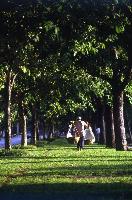
Zhuhai, China: There is huge potential for an increase in urban forests, trees and green areas to counteract the negative effects of rapid urbanization and improve livelihoods in the major cities of Asia and the Pacific, a regional meeting on urban forestry heard today.
The First Asia-Pacific Urban Forestry Meeting is co-convened by FAO in Zhuhai, China, where experts from 20 countries have gathered to consider ways to improve the lives and livelihoods of millions of urban inhabitants through the greening of cities.
The Asia-Pacific region is home to 53 percent of the world’s urban population and is projected to have one of the largest urban growth rates during the next 20 years, especially in developing countries.
Odisha govt. cautioned on violation of authority of gram sabha under FRA
Questions over green cover: Forest area in India half of what Ministry reports
Publication: FAO Yearbook of Forest Products 2014
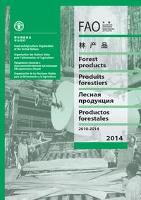
Published each year since 1947, the FAO Yearbook of Forest Products is a compilation of statistical data on basic forest products from over 100 countries and territories of the world.
The 68th edition of the Yearbook is published in 6 languages and contains annual data on the production and trade in forest products for the years 2010-2014 and on direction of trade in 2013 and 2014.
Climate projections for local adaptation in the Hindu-Kush Himalayas
This report is an output of the Himalayan Climate Change Adaptation Programme (HICAP). The aim of this report is to present downscaled climate scenarios in a relevant, understandable and illustrative manner for a diverse group of end-users and stakeholders, including other HICAP research components decision-makers at different levels. This report is based on dynamically downscaled temperature and precipitation projections for 8 different domains in the Hindu-Kush Himalayas. It uses the HICAP model (the WRF model, driven by the NorESM GCM model) for the RCP4.5 and RCP8.5 scenarios. Comparing model results with local observations for a reference period (1996-2005, the output was corrected for various under- and overestimations. For each domain, projections for periods 1996-2005, 2010-2030, 2030-2050 and 2050-2080 are presented a) in figures relevant for local users and decision makers, b) in a simplified text summing up the projections, and briefly discussing them in relation to potential impacts. This report provides highly relevant, locally specific results for the HICAP region, and relates these to geographical variations within each domain across the Himalayas. No other models and projections have been used in this report, and the HICAP model results should be compared with other sources of information for a final assessment of local climate change and impacts. The usability of the report extends beyond the HICAP project: the model-adjustment method, aimed at showing how to make projections realistic and relevant at the local level, the ease of the calculations and the guided interpretations of the figures and projections can serve as a guide to model use and presentations anywhere, provided the availability of a minimal amount of observations to compare and adjust larger scale model outputs to local climate observations for a certain reference period.
Ecuador drills for oil on edge of pristine rainforest in Yasuni
This huge region of Brazil is even more deforested — and less protected — than the Amazon
Tree census excludes mangrove, activists say urgent need for mapping
Experts work towards restoration of Latin America’s forests

Experts are discussing the restoration of Latin America’s forests and other ecosystems this week at a meeting in Bogotá, Colombia, co-organized by the Secretariat of the Convention on Biological Diversity (CBD), the Forest Ecosystem Restoration Initiative (FERI) and FAO. The capacity-building workshop will identify ways to help countries achieve the Aichi Biodiversity Targets, which aims to restore 15 percent of degraded ecosystems by 2020 worldwide. Globally, more than 2 billion hectares of land – an area the size of South America – are currently degraded, with a resulting loss of fertile soils, biodiversity and carbon stock that threatens the livelihoods, wellbeing, food, water, energy security and resilience of millions of people. Topics under discussion at this week's workshop will include monitoring and reporting tools, resource mobilization and private sector engagement, and representatives from Colombia, Paraguay, Ecuador and Guatemala will share their experiences on national planning for forest restoration. For more information on FAO’s work on forest and landscape restoration, please visit www.fao.org/forestry/flrm.
Environment ministry's five step process to faster clearance
Environment Ministry plans to introduce tree farming
Forests still large enough to double the world's tiger population, study finds
Europe’s Oldest Forest Is Threatened by a Beetle Infestation
As Indonesian forests burn, new anti-fire agency feels heat
Pages
