
Upper boundary at about 1000m.
(a)...
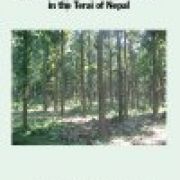
- Shorea robusta Forest: Where natural vegetation remains, this covers the greater part of the zone. Dominant species- Shorea robusta; Associate species- Terminalia alata, Adina cordifoliafa, Anogeissus latifolia, Syzyzium cumini, Dillenia pentagyna, etc. In hillside and plains, Shorea robusta forests differ in their general appearance. In the plains, the trees are larger and denser than the hills. In the eastern Bhabar Terai Zone, a number of additional species are found.
- Acacia catechu-Dalbergia sissoo Forest: Found on newly deposited alluvium, often gravelly, along streams and rivers. If this alluvium is not eroded, this type of forest will eventually be succeeded by Shorea or other types of forests.
- Other riverain Forest: Small strips of forest are to be found in moist localities near streams. Syzyzium cumini is dominant in western Nepal. This type of forest is not large and extends far from the stream banks.
- Grassland: Usually found on poorly drained clays, but in places may be the result of clearance of the forest for cultivation many years ago. Grass species such as Sacccharam spontaneum, Phragmites karka, Arundo donax, Eulaliopsis binata, etc.The grasses may reach upto 4 m and is found in Rapti valley (Chitwan).
- Terminalia-Anogeissus deciduous hill forest: It extends upto 1200m in western Nepal. It occurs in western Nepal in the foothills, where it replaces shorea robusta forest on south-facing slopes. Elsewhere it is confined to dry south-facing slopes in the larger river valleys. Terminalia alata and Anogeissus latifolia are dominant.
Tags: