

Excessive grazing by livestock is...
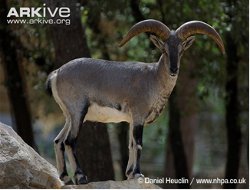 |
| (By: Mikmar Tamang) |
Taxonomic Classification
Kingdom: Animalia
Phylum: Chordata
Class: Mammalia
Order: Artiodactyla
Family: Bovidae
Subfamily: Caprinae
Genus: Pseudois
Species: Pseudois nayaur
English name: Blue sheep
Nepali name: Naur
Introduction
- Beautiful ungulates of Himalayas. Know as rock sheep in China; Jharal in India; naur in Nepali and na or gnao in Bhutan.
- A worthy trophy animal due to horns.
- Typically a Tibetan animal.
- Major prey species of snow leopard.
- Sheep like in appearance, blue sheep actually exhibits the behaviors of a goat.
Morphology
- Body Length from 115 to 165 cm, tail length from 10 to 21 cm. and weight from 35 to 75 kg.
- The under parts and backs of the legs are white, while the chest and fronts of the legs are black.
- The ears are small, and the bridge of the nose is dark.
- The horns are found in both sexes, In males, horns grow upwards, then turn sideways and curve backwards( up to 80 cm), In females, the horns are much shorter and straighter, growing up to 20 cm long.
- No calluses on knees.
- Their hair is short and they lack a beard.
- Blue sheep undergo seasonal color changes. Its summer coat is slaty blue and slaty grey during the winter; the coat color and blue shale of alpine rocks blend with each other. Females resemble males except they have shorter horns and the stripe is gray instead of black.
- Their pelage ranges from grayish brown to slate blue, hence the common name blue sheep.
- Invisible against the background of blue-grayish rock.
- Vision is sharp.
- The olfactory sense seems to be well developed. The auditory power is poorly known.
Life span
- 10% , lived 1-4 yrs, 73%, 4-10 yrs, and 17%, 11-15 yrs. Over 80% of the males died between the ages of 4-10 years during their prime. Maximum lifespan is15 yrs.
Habitat and Ecology
- Open grassy slopes in high mountains from 2,500-5,500 m.
- Near cliffs and similar escape cover.
- Very tolerant of environmental extremes from desert mountains in searing heat to windy and cold slopes.
- Generally above tree line.
- In Dolpa, an altitude of 4000m to 4500m. Blue sheep, musk deer and snow leopard occupy nearly the same ecological niches in the northern Himalayas of Nepal.
Annapurna Conservation Area
- Grassland habitats.
- Slopes of medium steepness (< 40 degree) on southerly aspects within the elevation range of 4,200-4,600 m. Most frequently in all seasons.
Kangchenjunga Conservation Area
- An altitude of 4400m- 4700m .Similarly herds were found on average 32 degree Slope compared with Wilson (1981) indicates a general preference by blue sheep for gentle, grass covered (60-70% grass/sedges) slopes with southerly and /or eastern exposures, at altitudes ranging from 3960m to 4570m.
In Phu valley of Manang district
- Most of the blue sheep herds were between the altitudinal range of 4300 to 4600 m. Blue sheep herds were found on average 26° slope On average 56.76% blue sheep herds were observed in grassland, 27.03% were shrub land, 5.4% were scarce, 8.1% boulder and 2.7% blue sheep were found in agriculture land.
General Behavior
- Blue sheep remain motionless when approached. Once they have been noticed, however, they scamper up to the precipitous cliffs, where they once again freeze, 'melting' into the rock face.
- Generally live in large group sizes ranging from 5-400 individuals. Males sometimes form all male herds, and sometimes mix with family aggregations.
- Herd composition changes frequently as single members and groups join and part. Aggressive behaviors include broadside display, horning vegetation, jerk and lunge, head shake, jump, butt, and clash among the members. Females also behave aggressively toward other females sometimes biting.
Food Habits
- 98% by volume - dry grass.
- Blue sheep are active throughout the day, alternating between feeding and resting on the grassy mountain slopes.
- They mainly feed on dry grasses in the winter and alpine grasses in the summer.
Reproduction, Rutting and Sexual Behavior
- The animals are sexually mature at 1.5 years, though males are not fully sexually active until age 7.
- Observed courtship display on lip curl, low stretch kick, inserting penis into mouth (3-8 seconds) etc. Aggressive behavior of blue sheep such as broad side display horning vegetation, Jerk and lunge, head shake, jump, butt and chase.
- During the rut male use multiple strategies for mating. Namely: Tending, Blocking and Coursing.
- Rutting starts towards late November and continue until February, with the young being born between mid-May and early-July
- Gestation period is 160 day. Single lambs (rarely twins) are born and weaning occurs in six months
Population and Herd Dynamics
- Population sizes of from roughly 47,000 (almost certainly a very conservative estimate) to 414,000 (probably an overestimate).
- In Nepal, Shackleton (1997) reported a “conservative estimate of 10,000 animals”, although Schaller (1998) included a table suggesting 1,947-2,561 in areas counted within Nepal.
- From Phu vally in Manang district Thapa K. (2005) reported 1209 individuals and average herd size of 32.68. Herd size varied from 1 to 103 animals. The average sex ratio male to female for the entire survey area was 0.67.
- Khatiwada et al.( 2007) from KCAP reported 1102 blue sheep with 25.62 herd size male to female ratio 0.9. The sex ratio (female to male) observed during the entire survey block was 0.90 (90 males per 100 females and compared with similar higher sex ratio (0.93) in Manang and 0.72 in Shey-phoksundo National Park .
Predation
- Bharal practice two ant predator strategies. They almost always remain near cliffs, in preparation to run toward rugged slopes to avoid danger with a female leading the retreat. Also, they give sharp alarm calls to warn fellow members of the herd. Predators are Snow leopard, leopards, gray wolves etc.
Competition of Blue Sheep and Livestocks on Diet Resources
- Mishra et al( 2004) in the high altitude Spiti Valley, Indian Trans-Himalaya in summer, Blue sheep, Yak (Bos grunniens) , horse (Equus caballus) , cow (Bos indicus) and dzomo (yak–cow hybrids) fed predominantly on graminoids, while donkey (E. asinus), sheep (Ovis aries) and goat (Capra hircus) , consumed both graminoids and herbs. In winter, bharal, yak and horse are apparently forced to consume relatively more herbs in their diet, because they largely graze in the few snow-free pastures that had been used by livestock throughout the summer, while the remaining livestock species fed predominantly on graminoids because they graze in pastures that are not used in summer but exclusively kept for winter grazing.
- And in the intensively grazed rangeland, Bharal density was 63% lower, and Bharal population showed poorer performance (lower young : adult female ratios) than moderately grazing rangelands.
- Restricting livestock numbers and creating livestock free areas are necessary measures for conserving Trans-Himalayan wild herbivores.
Shrestha and Wegge (2008) in Phu valley of Manang
- High overlap occurred cross-seasonally when small stock (sheep and goats) in summer used the spring and autumn ranges of Naur. Relatively high total ungulate biomass (3028 kg km−2) and low recruitment of Naur (56 young per 100 adult females in autumn) suggested interspecific competition. Owing to high cross seasonal (inter-seasonal) overlaps, competition is likely to occur between these two groups at high stocking densities. Within seasons, Naur overlapped more with free-ranging yak than with small stock. As their habitat use and diets were most similar in winter, when both fed extensively on the same species of shrubs, naur was most likely to compete with yak during that season.
Conservation Status, threats and Actions in Nepal
- The Bharal is listed as least concern under the IUCN Red List of Threatened Species.
- Poaching and, excessive competition from livestock grazing may cause habitat degradation in much of its natural range.
- Thapa. K. 2005 -religious beliefs protect wildlife- in place like Phu in Manang, strong religious sentiments are against mass killing and one such Lama is Karma Sonam Rimpoche, who took great conservation initiative 40 years ago.
- Anapurna Conservation area Project honored this Lama with an award on the auspicious occasion of the 1995 environment day celebration. Also World Wide fund for Nature Conservation (WWF), Nepal honored Lama with prestigious "Abraham Conservation" award on the auspicious of the 2003 world environment day.
- Thapa. K. 2005 also reported that, in Phu vally in Manang district, there is positive correlation among the densities of blue sheep, relative abundance of the snow leopard and livestock depredation. Blue sheep is the main prey species of the snow leopard in Phu valley and its conservation therefore matters to reduce livestock depredation. A general patterns appears here that shows that blue sheep (prey) abundance determine snow leopard (predator) abundance and that livestock depredation by snow leopards may be minimal where there is good population of blue sheep, and vice versa). So, steps should be taken to halt or reverse the habitat destruction caused by livestock grazing in the blue sheep’s natural habitat.
Tags:
