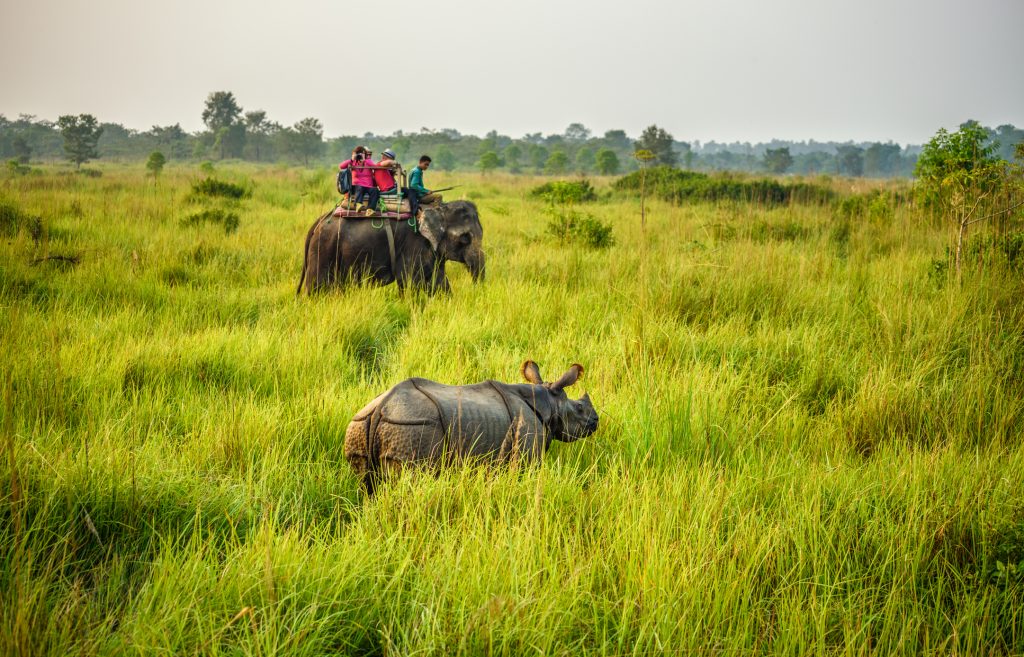
Nepal is well-known for its lush green forests, which hold great potential in resources. The task of government is to manage these resources sustainably not to undermine the country’s wealth and deplete its hard-earned foreign currency.
Recent forest monitoring data shows a timber supply shortage. It can lead to significant capital outflow through imports of timber, furniture, aluminum, and steel. It is crucial to address this issue promptly and responsibly to effectively manage and utilize Nepal’s forests. One possible solution is to use a diverse range of trees, such as pine trees, in community forests and protected areas.
Experts recommend adopting sustainable practices to harvest mature trees for commercial purposes. It can be done by planting ten saplings in place of each harvested tree. This approach will help expand forests and ensure a renewable timber supply for furniture production.
Nepal currently imports wood and furniture from countries such as China, India, and Malaysia, which costs millions of rupees. Encouraging local timber industries and promoting collaboration between the government, private sector, and community forest user groups can help reduce import dependence and boost domestic production. Thanks to the up-to-date technology, it’s also possible to monitor forest health remotely.
Current State of Forests in Nepal
Forest covers almost half of the whole Nepal territory. The Terai region in the country encompasses around 5.96 million hectares of land and serves as a major revenue generator through exporting timber to India. Forest management was largely neglected until the 1930s, which led to extensive deforestation. However, steps were taken towards preserving and managing national forests when the government nationalized all of Nepal’s forests in 1957, declaring them state property.
About 23.3% of the land in the country is now protected as national parks, wildlife reserves, conservation areas, hunting resources, and buffer zones. However, deforestation continues to be a significant concern. Due to the growing population, the forests face immense pressure, resulting in widespread deforestation and severe environmental problems.
The destruction of forests negatively impacts soil ecosystems, plant communities, and biodiversity. Severe environmental issues can arise from this, including soil erosion, landslides, and the risk of flooding. Protecting Nepal’s forests and promoting sustainable forest management practices is crucial. One of the potential solutions to address environmental concerns is to encourage ecotourism, establish community-based forest management, and provide alternative sources of income for the local communities.
Monitoring Forest Health Remotely
Remote sensing is crucial for forest ecological environment monitoring. Governments and organizations use it for forestry management. This technology provides data from airborne and space-based instruments to assess and analyze forest vegetation.
Positioning or navigation systems and ground-based remote sensing systems are needed for selective measurements and sampling. Airborne laser scanning measures the distribution of forest vegetation in three-dimensional space. New satellites that can provide high spatial resolution imagery improve differentiation and identification of objects.
Digital aerial photogrammetry is a modern method of obtaining three-dimensional information. Advanced digital aerial cameras enable more significant overlap between images at no additional cost. Using these cameras, more advanced computer hardware and modern multi-image matching algorithms allow the creation of point clouds from imagery. The technological development is crucial for forest vegetation monitoring as it provides more effective tools for improved forestry practices.
EOS Data Analytics, a global provider of AI-based satellite imagery analytics, has created EOSDA Forest Monitoring, a tool for monitoring and improving forestry management. The updated version of this solution includes several valuable features that provide reliable information on the state of forest lands
The Forest Cover feature enables the determination of the area of forest cover by comparing satellite images. It can also be tailored to meet the specific needs of our clients. The company offers frequent monitoring options and has a team of EOSDA experts who can ensure over 90% accuracy.
Thanks to the Deforestation feature, users can identify relevant occurrences within the area of interest over the required time periods. Reforestation is a feature that enables to analyze a given site and identify regions where successful reforestation has occurred. Tree species feature can differentiate between broad categories such as oak, birch, and pine.
Promoting Sustainable Forest Management
The Policy Learning Initiative aims to bridge the gap between scholarly research and practical application by exploring how CPF can employ policy learning and capacity building to disseminate and implement effective practices developed through research.
The initiative has established a policy learning framework to improve worldwide policy integration, adaptability, and stakeholder learning. This framework identifies and targets specific pathways of influence to achieve its goal. It is headed by IUFRO and maintained by the Governance, Environments and Markets Initiative at the Yale School of Forestry and Environmental Studies in the USA.
Conservation Efforts and Initiatives
WWF Nepal collaborates with the government and local communities to enhance the management of forests and forest resources. The goal is to promote sustainable and community-based forest management (CBFM) practices. The CBFM application has been shown to effectively increase community involvement in forest conservation and reduce human-caused deforestation and degradation. The program of WWF Nepal helps CBFM groups enhance the management of community woods by revising and implementing Forest Operational Plans and developing the capacity of user groups.
WWF Nepal is committed to promoting sustainable forest management. It involves sustainably regulating the yields of forests, with the consideration for regeneration. These measures can also increase the productivity and economic benefits of forests for society.
It is vital to apply sustainable practices and conservation of woods in Nepal to protect this ecosystem. It can be achieved by involving the community, receiving policy support, and forming partnerships. Forest health monitoring with the help of remote sensing can help to ensure the effectiveness of the conservation efforts. Sustainable strategies will help Nepal preserve its valuable forest resources for future generations, benefiting both people and the environment.