
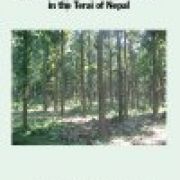
Sal (Shorea robusta Gaertn. f.) is a...
Sal (Shorea robusta) is the most dominant species of the natural forests of the Terai region of Nepal and holds 54.8 % of the total stem volume in the region (DFRS, 2014). Sal is mainly valued for its strong and durable construction timber but is also used as fuel and fodder (Jackson, 1994). Silvicultural operations are required to improve the productivity of natural Sal forests. Selection, Clearfelling and Shelterwood systems are implemented under the High Forest System. Similarly, Simple Coppice, Coppice with Standards, Coppice with Reserves and Selection Coppice are done under the Coppice Systems. Improvement felling such as singling and thinning, and climber cutting are also carried out for Sal stand development, focusing mainly on removing less valuable trees (HMG, 1977; Tiwari, 1995). Natural regeneration is the only relevant regeneration method for Sal (Joshi et. al., 1995). So, the Department of Forest Research and Survey (DFRS) has been conducting regeneration studies for Sal forest types in different districts of the country (e.g. Jogikuti (Rupandehi), Anekot (Kavrepalanchowk), Manahari (Makwanpur)) under various thinning regimes to assess regeneration potential and growth of degraded Sal forests. As our previous studies have only been limited to thinning regimes, there is a need to study the effect of other treatments as well. This study aims at assessing the regeneration potential, quality and growth of Sal forest in the Terai region under normal and ploughed condition.
Citation:
| Attachment | Size |
|---|---|
 sal_kapilbastu_report.pdf sal_kapilbastu_report.pdf | 392.23 KB |
