Forest management strategy in Nepal has been guided by the assumptions of either conservation or utilization; and till date very little research has been made into how these both assumptions can go together, or utilization related disturbances can be a part of forest management. Disturbances such as selective logging and illicit felling have been widely practiced in Sal forests since the inception of the timber and fuel-wood trade in the region. Increasing rural demand for leaf fodder has increased grazing and browsing pressure in the forests. Cutting and lopping for fuel-wood and fodder, and the collection of ground litter for livestock feed and bedding materials have occurred widely in Sal forests. Such diverse uses of Sal forests signify that these forests are exceptionally disturbed. Witnessing their inherent association with the forest system, disturbances are something that cannot be avoided in Sal forests, but rather are something to deal with. Therefore, multiple and simultaneous disturbances occurring in Sal forests need a thorough study; and their synergistic effects on each component of ecosystem of Sal forests should be assessed so that the forest management policy and institutions can be made more realistic in terms of achieving both goals of ecosystem based forest management- conservation and sustainable use of forests.
Methodology:
The nexus between a set of existing disturbances of varying intensities and the diversity and regeneration of Nepalese Sal forests was examined. In addition, the effects of a single disturbance factor – tree fall gaps – on species diversity, regeneration and early growth of Sal forest were assessed. The intensity of the combined disturbances in each of the studied forests was calculated using a relative impact of each individual disturbance.
Key findings:
The study found out that the total stem density of saplings and poles increased with increasing disturbance intensity, to a certain level, while most of the tree species in the community showed changing dispersion patterns along the disturbance gradient. Socially preferred tree species displayed high regeneration performance in forests subjected to moderate level of disturbance. Tree fall gaps favored regeneration by increasing the density of seedlings of some socially preferred tree species and promoted the maintenance of high species diversity. However, neither overall species diversity nor regeneration positively correlated with gap size; but the maintenance of species diversity and regeneration in gaps are related more strongly to several other attributes of gaps than gap size.
The conclusions:
Generally, forests subjected to moderate level of disturbance maintained species diversity and enhanced regeneration performance, which in turn was coupled with the regeneration strategy of key species – in line with the Intermediate Disturbance and Recruitment Limitation Hypotheses. In other words, the species of Sal forests collectively embrace both functional phenomena of ecosystem while they regenerate in a disturbed environment. Some of them show prolific regeneration pattern upon receiving a mild level of disturbances (e.g. Sal); and some of them lower their regeneration as they do often encounter a high level of exploitation (e.g. several fodder species) and lack their propagules in the regeneration process.
Policy conclusions
- Mild disturbance with limited public and herbivore access to the forests does not necessarily hinder the overall stand regeneration and species diversity, but may enhance them.
- Since the rural population is highly dependent on these forests for their subsistence needs, strict protection is neither feasible, nor does it result in higher forest regeneration.
- Ecosystem-based management, focusing simultaneously on optimization of the consumptive forest products for human populations and enhancement of species’ regeneration and diversity, would be a viable management strategy for Sal forests in Nepal.
The study signifies that moderate level of disturbance may be touted as a management tool for Sal forests.
Some follow-up questions:
Forest disturbances mainly in tropical economies are inherent to the system; and these disturbances cannot be avoided, rather need to be accommodated; therefore, the study recommends to develop them as a forest management tool. There are a few questions that need serious thinking:
- Do we really need to go for strict protection in order to see more resilient forests?
- Disturbances are everywhere, and disturbances are there with some valid reasons too i.e. livelihoods of local people; then why not to manage these disturbances in order to achieve the twin goals– to address the local needs and also to see more resilient forests?
- Shall we re-think over the extreme conservationist considerations, and move to ecosystem based management of Sal forests?

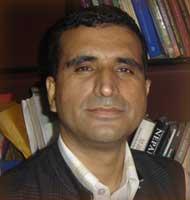
Indra Sapkota has recently received the Ph.D. degree in Forest Management from Swedish University of Agricultural Sciences, Sweden. His previous degree is M. Sc. in Tropical Forestry and Management from Technical University of Dresden, Germany. He is currently associated with Ministry of Forests and Soil Conservation. He is also collaborating research works with Southern Swedish Forest Research Center, Sweden. He has published over a half dozen of publications in several journals of international repute.
| The Forest Policy Seminar Series is the joint Initiative of ForestAction Nepal (www.forestaction.org), Nepal Foresters Association (www.nfa.org.np), Institute of Forestry (www.iof.edu.np), College of Development Studies (www.cds.edu.np), Kathmandu Forestry Collage (www.kafcol.edu.np) and National Policy Learning Group. The purpose is to facilitate scholarly debate and reflections on forest policy and governance in Nepal. If you have any interesting research findings that is relevant to contemporary forest policy debate, please send a 250-300 words abstract to Dr Hemant R Ojha , the seminar coordinator, at [email protected]. Currently we plan to organise monthly presentations, but if there more demand, we can go up to two presentations every month. |
| Attachment | Size |
|---|---|
 Abstract for Seminar Series 3, indra sapkota[1].pdf Abstract for Seminar Series 3, indra sapkota[1].pdf | 248.17 KB |
Events:
Tags: